.png)

INCA TRAIL: FOUR DAYS, THREE MOUNTAIN PASSES, AND A SUNRISE AT THE SUN GATE
HOME / DESTINATION / GREAT WALKS / INCA TRAIL
43 km over four days, crossing Dead Woman’s Pass at 4,215 m, through cloud forest and Inca ruins, arriving at Machu Picchu through Inti Punku at dawn. It’s one of the world’s most iconic treks — and the permit system means it stays that way. When the classic trail is full, the alternatives aren’t consolation prizes. They’re different experiences worth choosing on their own merits.
The Classic Inca Trail
4 days
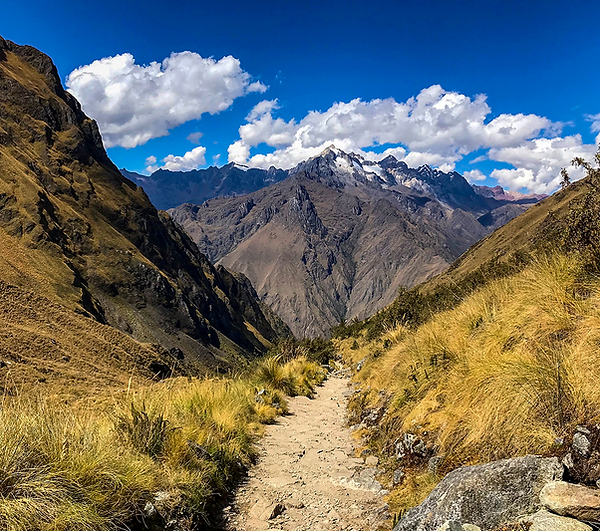
Day 1: Km 82 to Wayllabamba — gentle start, acclimatisation. Day 2: Dead Woman’s Pass (4,215 m) — the hardest day. The one that earns everything after it. Day 3: Phuyupatamarca and Wiñay Wayna — Inca ruins above the cloud line. Day 4: Sun Gate at dawn, then Machu Picchu. You’ll understand why everyone talks about it.
Best for:
Adventure travellers, history lovers, committed hikers who’ve acclimatised
Planner’s edge:
Permits sell out months ahead. Cusco acclimatisation (2 days minimum) is non-negotiable. We build the Sacred Valley itinerary around the trek so the whole Peru trip feels designed, not just tacked onto a hike.
.png)
.png)
Salkantay Trek
5 days
The most popular alternative — and for good reason. Higher altitude than the Inca Trail (4,630 m at the Salkantay Pass), more dramatic scenery, and no permit lottery. The route crosses from glacial peaks to cloud forest, arriving at Aguas Calientes for a morning bus to Machu Picchu. Less crowded, more varied terrain, and available when the Inca Trail is sold out.
Best for:
Fit hikers who missed Inca Trail permits, those who want bigger mountain scenery, travellers who prefer fewer people on the trail
Planner’s edge:
The Salkantay doesn’t require the same advance booking as the Inca Trail, but lodge-to-lodge options (vs. camping) do sell out. We book the lodges first, then build the itinerary around them.
Lares Trek
3-4 days
The cultural alternative. Less altitude drama than Salkantay, more Andean village life — weaving communities, hot springs, and high-altitude passes with views of the Urubamba range. Ends with a train to Aguas Calientes. This is the route for travellers who want the hiking but care more about the people than the peaks.
Best for:
Culturally curious travellers, those wanting a less physically demanding alternative, photographers interested in Andean communities
Planner’s edge:
Lares is the least crowded of the three and the most flexible on timing. We pair it with Sacred Valley days to build a complete Peru itinerary that doesn’t feel like a consolation prize for missing the Inca Trail.
.png)
.png)
Choosing the Right Route
Planning Considerations
The Inca Trail has 500 permits per day (including guides and porters). They release in October for the following year and the popular months (May–September) sell out within weeks. If your dates are flexible, we can often find permits. If they’re fixed and the trail is full, Salkantay and Lares aren’t backup plans — they’re different experiences worth choosing on their own merits. We recommend based on your fitness, your interests, and what matters more: the historical arrival through the Sun Gate, the mountain drama, or the cultural immersion.
Best for:
Anyone planning a Peru trip — the trail choice shapes the whole itinerary
Planner’s edge:
We monitor permit availability and advise on timing. If you’re set on the classic trail, we start the conversation 8–12 months out.
Journey Map


START WITH A CONSULT
A focused conversation to align on goals, style, and priorities. You leave with direction, not vague inspiration.